
On a drizzly grey night that felt like summer's last breath, crowds packed into Melbourne's Palace Foreshore in St Kilda, rain slicking the ground and patience wearing thin.
Grace Jones was meant to start half an hour earlier. No one complained. When the music finally crept in and the black curtain dropped, the delay felt intentional, ceremonial, like the room was being asked to wait for something bigger than a set time.
There she was, seated atop a throne, surveying the crowd with the calm authority of someone who's spent a lifetime being looked at and never flinching.
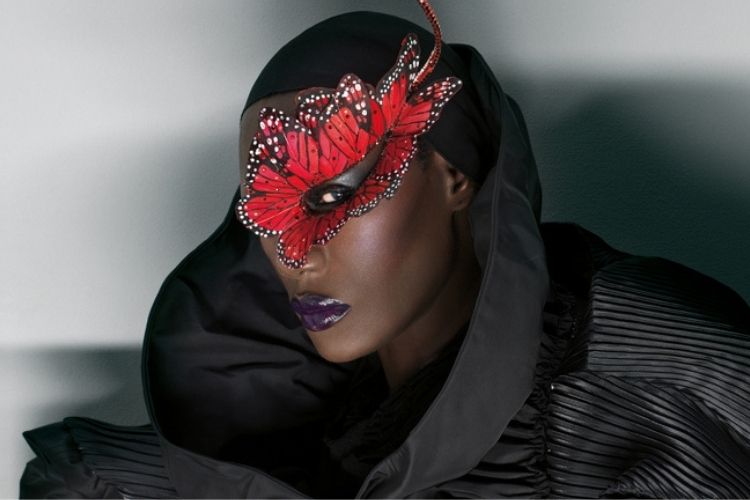
At 77, Jones doesn't lean on nostalgia or soften her edges. She looks less like a pop star and more like a living artefact. The outfit was sharply tailored and architectural, all hard lines and control, but the headpiece was the real spectacle.
Sculptural and pleated, folding in on itself like origami, it framed her face as if she'd been carved from something ancient and unbreakable. It was impossible not to think of the woman who once dominated Paris runways and magazine covers, redefining beauty and gender long before those conversations were mainstream.
She opened with 'Nightclubbing', stripping Iggy Pop's louche cool down to something colder and more severe. From there, the set unfolded like a declaration of intent.
'This Is' bled into 'Private Life', then 'Warm Leatherette', each song delivered with that unmistakable Jones restraint. She doesn't chase notes. She places them. Every word feels deliberate, weighted, exact.
Her voice carries the same authority that made her an icon across fashion, film, and music. Solid and immovable, it sits low and assured, delivered with a cool precision that borders on spoken word.
There's an androgynous sharpness to it, intimidating and elegant in equal measure. At times it feels distant and exact, almost machine-like. Then it shifts, turning sly, warm, and knowingly seductive.
That tension is the point. She isn't singing to be liked. She's staking her claim. When Grace Jones performs, her presence arrives before the sound fully lands.
Mid-set, she asked if anyone had ever been to Jamaica, then took us there with 'My Jamaican Guy'. She then swept the crowd to Argentina with 'I've Seen That Face Before (Libertango)', emerging dressed like a high-fashion bullfighter, theatrical, absurd, and completely convincing.
Chaos, she told us, is something she loves. What she delivered was organised chaos, tightly controlled and gloriously unhinged.
'Williams' Blood' landed with quiet force, but it was 'Amazing Grace' that truly stilled the room. Stripped back and reverent, it revealed the full weight of her voice: powerful, emotional, and unexpectedly tender.
Outside, the rain kept falling. Inside, no one cared. If anything, it seemed to fuel her. She didn't flinch. Neither did the crowd.
She moved effortlessly into 'Love Is The Drug' and 'Pull Up To The Bumper', changing outfits between almost every song, each look more audacious than the last. Between numbers, she was sharp, funny, and oddly intimate, sipping wine and calling it communion.
That's exactly what it felt like. A congregation gathered under grey skies, willingly led to church by a woman who, at 77, is still bending culture to her will.
The night peaked with 'Slave To The Rhythm'. Jones hula-hooped through the entire song, a bedazzled hoop spinning around her body as if gravity had been temporarily suspended. It was ridiculous. It was iconic. It was Grace Jones reminding everyone exactly who she is.
By the time the final note rang out, clothes were soaked and spirits were high. Seeing Grace Jones live isn't just watching a concert. It's witnessing an icon in her living flesh, still fearless, still commanding, still thrillingly strange. Rain and all, it was one of the best shows I've ever seen.