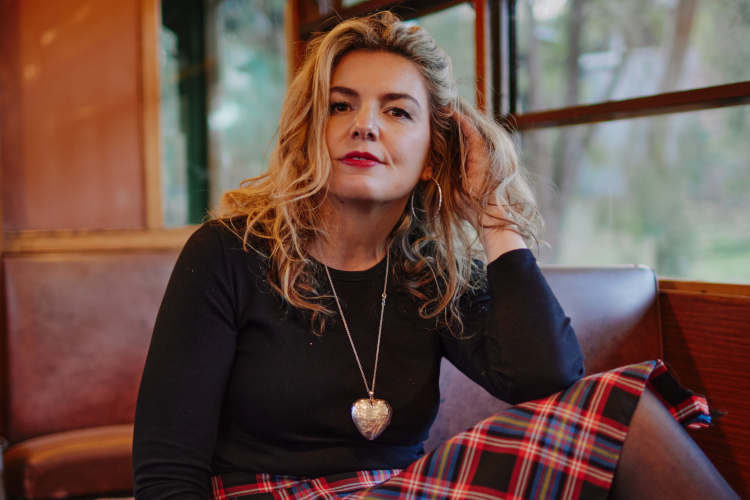
The final edition of Live Nation’s 2025 Ones To Watch series will be a special evening for Australian singer-songwriter and disability advocate Eliza Hull, supporting a cause close to her heart.
The Live Nation Ones To Watch series regularly showcases the next crop of emerging Australian musical talent. At the end of November, Ones To Watch presents its final edition for this year in conjunction with International Day Of People With Disability (3 December).
For Eliza, it’s the culmination of her advocacy work to dispel the stigma around disability and promote increased industry support for artists with disabilities.
“Live Nation reached out to me as an artist that has been advocating for a lot of these changes in the industry for a while,” Eliza explains.
“It was a great thing to hear that they wanted to do a Ones To Watch showcase like this where a lot of artists with disabilities are often underrepresented, so to have them back an event like this is pretty incredible and a sign of the times really.
“Live Nation are not only doing this event, but all the artists are doing an interview series, and so am I, about how Live Nation can embed this going forward. So, it’s not just a tokenistic night, it’s a move towards more inclusion for artists with a disability.”
The artists performing – Mathilde Anne, r.em.edy and Cooper Smith – have been hand-selected by Eliza not only for their talent and potential, but also the complex spectrum of disability they represent.
“It’s that thing around disability looks like different things,” she says.
“It’s not just somebody that’s a wheelchair user, and to showcase the very fact that disability can look like different things. And to also showcase different styles, so the artists all have their own style.
“Mathilde, I think she’s like Billie Eilish. She’s got such a beautiful tone to her voice and that really downtempo, heartfelt music. Then r.em.edy is more of that sassy R&B style, and Cooper is a great artist with cerebral palsy who is a DJ but he’s also writing with other producers.
“It’s a great set of artists that deserve this celebration of who they are as artists and musicians that also have a disability. But to be honest, they are just incredible artists and that’s why I chose them, because I really believe they are the ones to watch.”
The show is part of an industry-wide push to make events more accessible and inclusive for disabled artists and audiences, from challenging entrenched, myopic perceptions about what disability looks like, to making events open and enjoyable to everyone.
“Some disabilities are more visible than others and you can never fully know whether the line-up does have disability representation,” Eliza says.
“Being in this space for quite a while and knowing the great artists that exist with disabilities that are still not really getting that representation and still not on those festival line-ups, still not getting certain awards.
“I think the barriers that exist are based on lack of representation, like not having these artists in these spaces. Also, so many physical barriers exist to get up on a stage to accept an award, to perform. As we know being a touring musician is quite tiring – lugging gear around, long hours; it can be a pretty inaccessible industry at times.”
One of the biggest challenges for Eliza has been educating people about the many forms in which disability manifests, from obvious physical traits to far more subtle conditions that can affect a performer.
“I often think that sometimes having what is classed as an invisible disability is at times harder for that very reason,” Eliza says.
“I have a disability called Charcot-Marie-Tooth, which is a neurological condition. For me I have invisible parts to it but also visible parts because I walk differently, I really struggle to get up stairs.
“For artists that have maybe a chronic illness or a more invisible disability, even autistic artists, I think that would be really tricky because you might look at someone and go: ‘why would you need access requirements?’”
Eliza says making gigs accessible for artists with disabilities can be as easy as venues asking if they have any special requirements, regardless of how someone appears.
“For autistic artists – and I know many – some really simple things to support those artists, like having a quiet space, which again is really quite tricky at a live music venue, but it’s possible,” she says.
“Enabling that for someone if they have quite high sensory sensitivities, that quiet space would be such a game-changer before you perform. Just asking the person is so important, so I really try and advocate for live music venues and festivals, when you send out your rider for what you want to eat and drink, send out an access rider as well.
“All you have to say is: ‘do you have any access requirements’, and if someone says ‘no’ then that’s it. But if someone says ‘yes’, I feel like that’s a way forward to make it a more inclusive industry.”
Eliza says there is still a lot of work to do for artists with disabilities to achieve parity in the industry, but with influential agencies like Live Nation making positive steps, the change is underway.
“My hope is that we really see artists with disability winning major awards for their music and really seeing that representation so that emerging artists can see themselves and know this music industry we are all part of is one that’s safe and inclusive and enabling those future artists to come forward.”