
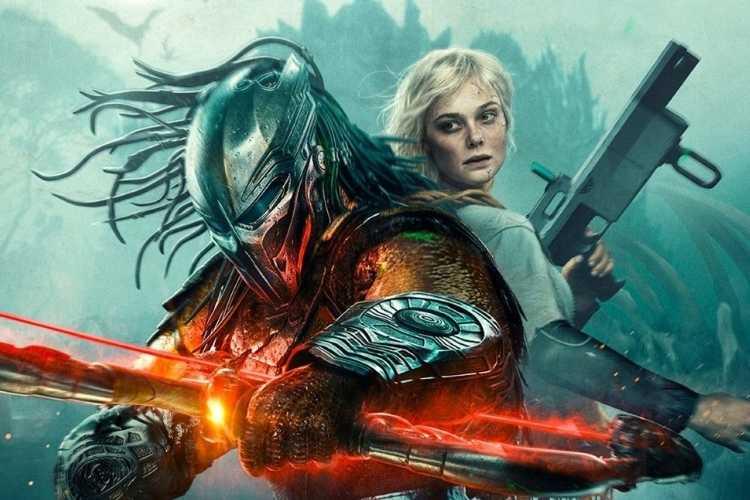
'Predator: Badlands' feels like a real swing for the franchise.
Instead of keeping the Predator in the treeline or treating it like a walking brutality machine, the film puts one at the centre. Dan Trachtenberg already reset the franchise’s direction with 'Prey', and here he pushes even further. It’s the kind of decision that could’ve collapsed under its own ambition. It doesn’t. He manages to make us care without declawing the creature.
Dek is the smallest of his clan, raised in a culture obsessed with trophies and dominance. His hunt for the Kalisk on the planet Genna starts like a textbook rite of passage, but it becomes something closer to a coming-of-age story. His growth isn’t about proving he’s strong. It’s about understanding the emptiness of chasing strength for its own sake.
Genna feels dangerous in every direction. The world-building is more thoughtful than we usually get in this series. The ecosystems, the architecture of Yautja society, the way their technology fits their ideology — it all feels designed rather than sketched. And the film goes all-in on culture. We get a fully-realised Predator language and actual insight into clan politics, making the species feel ancient, layered, and oddly relatable.
Dek’s reluctant connection with Thia, a damaged Weyland-Yutani synthetic played by Elle Fanning, grounds the film emotionally. Fanning plays her with warmth and empathy that never tips into sentimentality. She’s a stabilising presence and a great foil to Dek’s headstrong intensity.
The movie is also funnier than expected. Sometimes the humour snaps things into relief, sometimes it takes a little air out of the tension, but it never derails the film. It gives the violence and grief room to land without the story feeling oppressively grim.
The physical performance by Dimitrius Schuster-Koloamatangi inside the Predator suit has real weight. Some CG creatures can lean glossy, sure, but the practical work, fight scenes, and movement choreography give everything a grounded presence. Even with a PG-13 rating, the violence still lands. There’s a sequence toward the end that ranks with the best in the franchise.
At its core, this is an underdog myth. Dek doesn’t win by becoming the ideal his culture demands. He chooses something else altogether. And the film makes that choice hit.
This franchise has had peaks and valleys, but 'Badlands' sits with the peaks. It remembers what makes these stories compelling — not the gadgets, not the body count, but the tension between instinct and identity.
This series is in very good hands.