There are TV characters who burn bright and fade. And then there are the ones who refuse to stay buried.
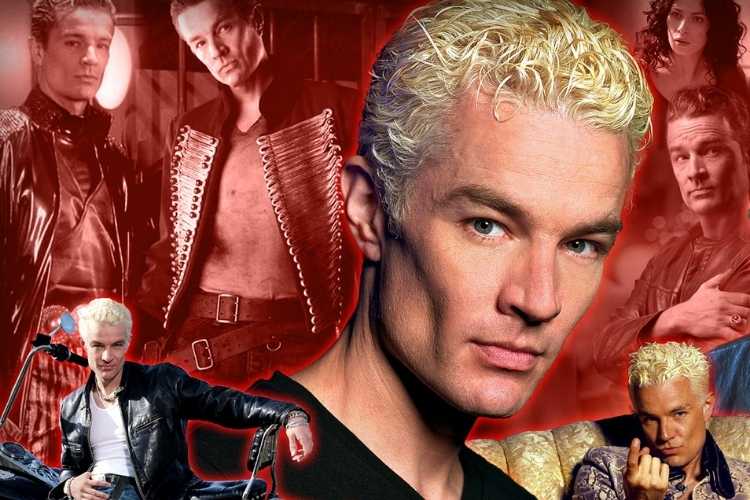
James Marsters, known to most as Spike from 'Buffy The Vampire Slayer' and 'Angel', is heading to Australia for Supanova Comic Con & Gaming, appearing at both the Gold Coast and Melbourne events. It has been years since he last toured here, but judging by the reaction whenever his name is mentioned, the devotion hasn’t dimmed.
Spike was never meant to last.
“When I first joined the show, I was designed to be Angel’s first victim,” Marsters says with a laugh. In the original plan for season two, Spike would be killed off early to heighten Angel’s villain arc. “They built me up to be a badass so that when Angel killed me, he’d be the big bad.”
But the character refused to die. On screen and off.
Marsters admits it was partly survival instinct. At the time, he had an infant son and needed steady work. Playing Spike as a flat, soulless villain would have guaranteed a quick exit. So he rebelled, quietly.
“The only way to connect with an audience is to find the love somehow,” he says. “It doesn’t have to be Valentine’s Day love. It can be warped. Betrayed. Frustrated. But you have to find it.”
For Spike, that meant leaning into his obsessive devotion to Drusilla. It wasn’t what the producers initially wanted. It worked anyway.
The writers responded. Each season they peeled Spike back further. Villain. Romantic. Anti-hero. Broken man. “It almost felt like every season was a different character,” Marsters reflects. Compared to many television roles, Spike’s arc was sprawling and contradictory. That complexity is part of why he endures.
The other reason is more thematic.
At its heart, 'Buffy The Vampire Slayer' was never really about vampires. It was about resilience. Adolescence. Outsiders. Finding something worth fighting for.
“Buffy speaks to people who feel like outsiders,” Marsters says. “And within that group of outsiders, Spike was cast out. He was the outsider of the outsiders.”
The show arrived at a time before social media saturation and climate anxiety dominated daily conversation. Yet its core message, don’t give up, feels sharper than ever. Marsters is aware of how often younger fans are discovering the series for the first time through streaming.
“I’m still getting teenagers coming up,” he says. “And I’ve never met anyone who watched 'Buffy' and didn’t like it.”
The pandemic only expanded the audience. Viewers who had exhausted other shows stumbled into Sunnydale. Parents introduced it to their children. The fandom grew rather than calcified.
Supanova provides the physical proof of that growth.
Unlike scrolling alone at home, conventions are communal. Cosplayers line up for photos. Strangers debate favourite episodes. Actors sit on panels and answer questions that span decades.
“There are very few places left where people come together in three dimensions just to talk to each other,” Marsters says. “Conventions provide that.”
For Marsters, these events are not transactional. They are affirming. He hears stories from fans who found comfort in Spike during difficult teenage years. People who felt different. Misunderstood. Angry. Lonely.
He understands that impulse. Growing up during the Cold War, he found his own solace in 'Star Trek'. “It was selling hope,” he says. “Hope that humanity might mature.”
That thread runs through Spike’s unlikely legacy. A vampire who learns, painfully, about love and choice. A villain who stumbles toward redemption. A character who proves you can change.
For a generation that grew up with Sunnydale, and another discovering it now, Spike’s return is less nostalgia and more resurrection.
Supanova Comic Con & Gaming plays Gold Coast Convention & Exhibition Centre 11-12 April and Melbourne Showgrounds 18-19 April.