
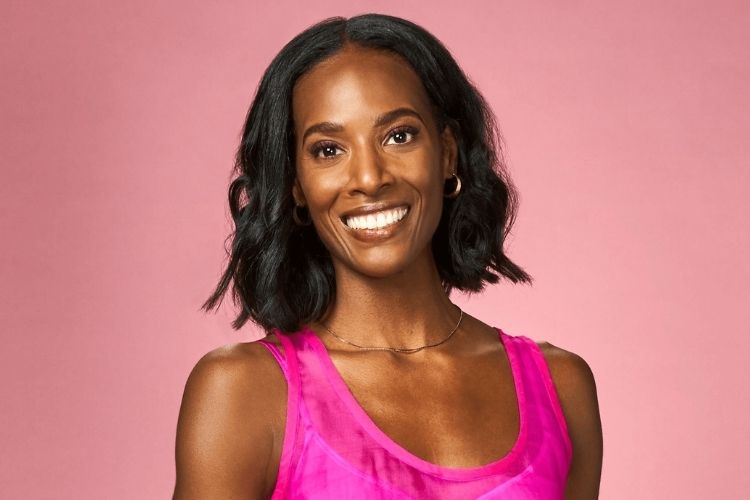
There’s a point in 'Toxically Optimistic' where Zainab Johnson starts talking about why Americans are so attached to guns, and instead of going where you expect, she flips it. It’s not about politics, not really. It’s because, according to her, Americans can’t fight.
The room loses it.
That’s kind of the rhythm of the whole show. She takes something heavy, or at least something that feels like it should be heavy, and twists it just enough that you’re laughing before you’ve had time to brace yourself.
Johnson’s delivery is clean, almost deceptively so. There’s no chaos to hide behind, no rambling. Every beat feels placed. It gives the material space to land, even when she’s jumping between ideas that shouldn’t quite sit together – gun culture, home ownership, getting hit by a truck, and a surprisingly tender, completely ridiculous friendship with the opossum living at her house.
The opossum stuff shouldn’t work as well as it does. On paper, it’s absurd. In the room, it’s one of the strongest threads of the night. The way she builds it out, turning this random animal into something oddly meaningful without losing the joke, is where you really see the craft. It’s silly, but it sticks.
There’s also something quietly sharp running underneath it all. Her bit about buying a house and immediately being told she needs a gun doesn’t turn into a rant, but it doesn’t need to. The joke does the work. Same with the idea of safety, who gets to feel it, who doesn’t. She lets those questions sit there, then moves on before it gets too neat.
And then there are the moments that just hit out of nowhere. A story about being hit by a truck that somehow spirals into one of the funniest parts of the set. It shouldn’t be funny. It really shouldn’t. But it is, in that specific way where you’re laughing and slightly questioning yourself at the same time.
The whole show leans into this idea of optimism, but not in a soft or sentimental way. It’s more stubborn than that. Like choosing to see the upside even when the evidence isn’t exactly convincing.
By the end, it feels earned. Not because she’s tried to convince you, but because she’s shown you how her brain works, how she gets from point A to something completely sideways, and somehow more honest. I laughed the whole way through. Proper, no-holding-back kind of laughing.
Which, given the subject matter, feels like its own kind of trick.