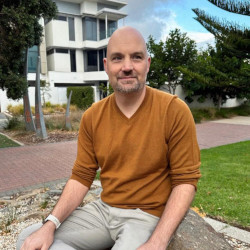

Reggie Watts has never been one to follow the script. The comedian, musician and philosophical provocateur thrives on spontaneity, whether it’s a late-night TV sketch, a TED Talk, or an improvised symphony of beatboxing and electronics.
As he prepares for an Australian tour this November, Watts reflects on improvisation as both an artistic method and a way of being in the world.
For Watts, improvisation is not a stylistic flourish, but the only way he can create. “People are always going to be resistant to things they’re uncertain of,” he explains. “But for me it’s the only way I can really do things. I don’t really have a choice. At a certain point it’s about the proof of your work. If you produce really good work and good results, then who the f... cares?”
The reward of this approach is not just artistic freedom, but the chance to ease other people’s fears. “When it works and people see it unfold, you’ve taught them something too. Everybody learns in that process.” Improvisation has led Watts into memorable moments on major stages. When Barack Obama appeared on 'The Late Late Show with James Corden', Watts asked him about aliens; a question so disarming that Obama jokingly suggested Watts himself was the alien.
“It was a simple enough question, so I just went for it,” Watts recalls. “Obama’s charming response wasn’t surprising. He’s a clever guy, a really good orator. That’s just who he is.”
Watts sees improvisation as a missing ingredient in modern politics. “It’s so lame when you feel a rehearsed answer,” he says. “Those politicians have fear. People who don’t have fear and have an actual opinion speak plainly. It’s very rare someone makes it through the political process and still keeps that intact.”
He believes the rise of populist leaders, even those with authoritarian tendencies, has been fuelled by frustration with scripted politics. “They speak in a plain way. It’s not in nice terms, but it feels like they’re just like me. That’s why people respond.”
He points to figures like Zohran Mamdani in New York as examples of left-wing politicians of substance who balance talking points with sincerity.
“The whole political system is theatre,” he continues. “It barely keeps things functioning. All you have to do is be yourself, but it doesn’t occur to people because the culture reinforces the performance. Eventually it will be replaced by better systems.”
Watts has not shied away from difficult topics in his own public life, including outspoken support for Palestine. “It’s been scary to speak up, because you worry what people will call you. But at the end of the day, you have to be yourself. If you’re on a platform, you should consider how your words are received, but you need conviction. You can’t just say the first thing that comes to mind, but you can speak with love.”
He describes a heated debate with Zionists at a party, in which he deliberately avoided insults and returned constantly to compassion. “The secret weapon is love,” he says. “As long as I’m speaking from love, I’ll be all right.”
For Watts, love is not a sentimental theme but a tactical stance. “Even my activist friends, I tell them: try not to get too oppositional. Have compassion for the people you’re speaking against. If you’re thinking of it while you’re writing or speaking, people can feel it. Sincerity is detectable.”
He compares it to classic cartoons. “It’s like Bugs Bunny and Elmer Fudd. Elmer just wants to kill and eat the rabbit, but Bugs dances around joyfully. In a way he’s inviting Elmer to join, but Elmer can’t. That’s what it’s like when politicians are spouting gross sh.t. Creativity, love and absurdity are a thousand times faster than their reaction times. If you use them with compassion, you can expose their absurdity without being cruel. That’s the magic.”
Unconditional love, Watts insists, extends even to those who frustrate or oppose. “When you come up against people who don’t treat you well, if you view them as challenges to your conviction, you can be grateful. Even the worst interactions can teach you.”
He recalls ending the party debate by thanking his opponents for their time. “That felt really good. There are ways to soften your stance and still include people in their humanity, even if they’re not functioning from a place of humanity.”
Improvisation, then, is more than a creative technique; it is a political and spiritual practice. By staying playful, refusing to harden into oppositional postures, and reminding others of love, Watts believes performers and citizens alike can create change.
“When you keep reminding people of love, they have no where to go,” he says. “That’s unconditional love. It’s hard, because you come up against things that are annoying and people who treat you badly. But if you keep returning to compassion, you win.”
Watts will bring this ethos to Australia in November, presenting shows that weave comedy, music, beatboxing and philosophical musing into one-off nights that will never be repeated the same way again. Audiences can expect absurdist characters, improvised songs, and spontaneous reflections on everything from politics to the human condition.
“Ultimately I want this world to be a better place for all people; even the worst of us,” he says. It’s both a mission statement and a performer’s creed: respond to what arises, keep it playful, and let love carry the weight.”
Reggie Watts Australia 2025 Tour Dates
10-11 November – Sydney Opera House (Just For Laughs)12 November – The Tivoli (Brisbane)
13 November – Melbourne Recital Centre
17 November – Astor Theatre (Perth)