On paper, the Brisbane Comedy Festival looks like a growth story. Bigger numbers, more venues, international acts folding it into their touring schedules like it’s always been there.
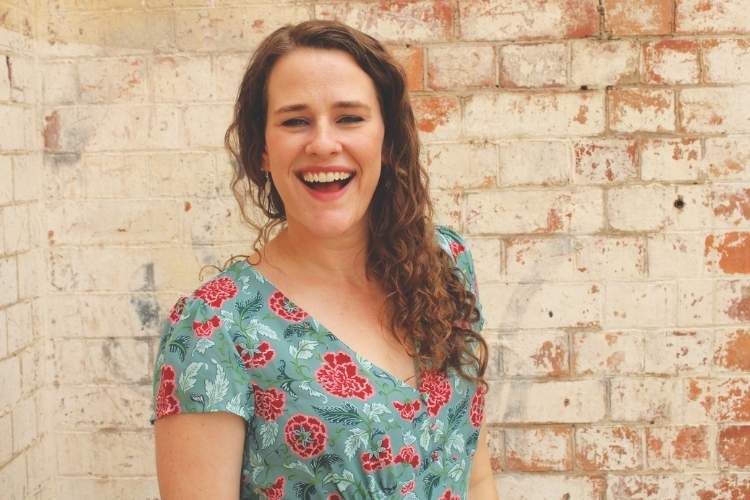
But sit down with Festival Director Phoebe Meredith and the story shifts. It’s less about scale, more about instinct, timing, and knowing when not to push too hard.
Meredith has been steering the festival since 2018, stepping into something that already worked and figuring out how to stretch it without breaking it. It was already one of Brisbane’s cultural mainstays, well-loved and well-attended. Her job wasn’t to rebuild it. It was to push it forward.
What she changed was the definition of comedy.
Where the programme once leaned heavily on stand-up, Meredith widened the frame. Musicals, theatre, visual art, film, she’s pushed the festival beyond a single lane and into something more expansive. “I’m really interested in the whole comedy genre,” she says, leaning into stand-up, but also “all the sub genres,” from theatre works to film and everything in between. The result feels less like a circuit and more like a conversation, one that reflects how audiences actually engage with comedy now.
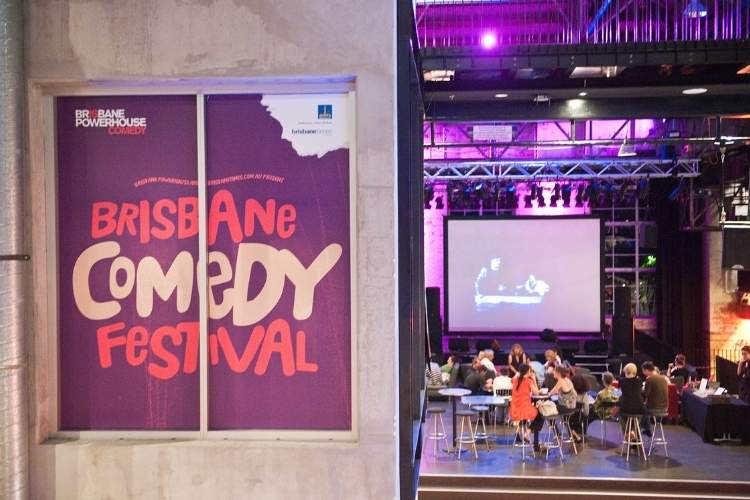
Brisbane Comedy Festival 2010
That openness traces back to the festival’s origin, in 2009. It was first curated by Josh Thomas, the mind behind 'Please Like Me', who saw a gap and decided to fill it.
But none of that growth has been rushed.
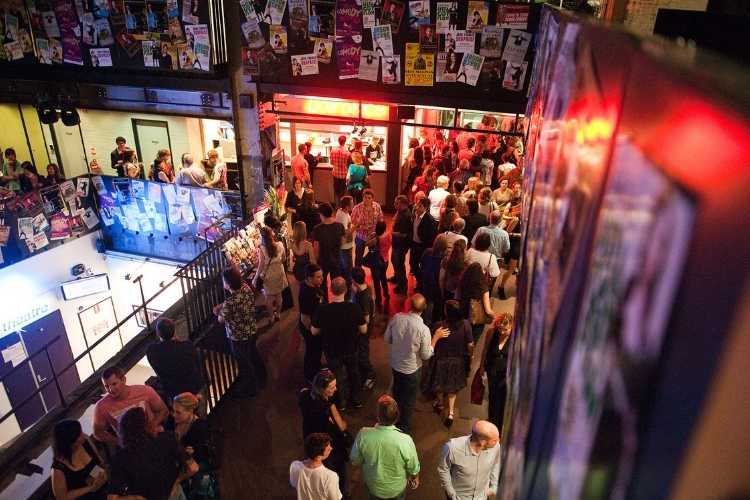
A few years ago, the line-up sat around 50 artists. This year, it’s 145. There’s a fifth venue in play, with the Thomas Dixon Centre joining the map as a test. Meredith approaches expansion slowly, deliberately.
Check out scenestr's extensive Brisbane Comedy Festival coverage over the years.
In 2025, the festival pulled in more than 90,000 attendees, a 20 per cent jump that caught even her off guard: “Our attendance last year was bigger than I expected,” she says. “I wasn’t really expecting the festival to grow any more. I was expecting a little uplift, but not that much.”
Instead, the numbers pushed her into a rethink, not a reinvention, just a pause to ask what comes next.
She went back to the data. “It’s a real numbers game, it’s a real data game,” she says, reflecting on capacity and the reality that “I can’t programme everybody”. That tension led to testing new ground this year, bringing in spaces like the Thomas Dixon Centre. Not a full leap, just a toe in. “Rather than going all in. . . We’re just trying, trying to see if the audience is responsive.”
They were.
Brisbane Comedy Festival 2010
“People have bought lots of tickets,” she says. “So that tells me that there’s an audience there.”
Still, she’s careful about what that means. “Especially now, when putting on a festival is so expensive, taking things slowly but with intention is the best approach.” Growth isn’t about fixing what’s already working. “The festival is not broken,” she says. “I don’t necessarily need to change it.” The motivation is simpler: creating more opportunities for artists to show their work, and for audiences to see it. But it has to be measured. “It’s a kind of calculated risk.”
If there’s a through-line to how she curates, it’s balance.
“Comedy is a reflection of community,” she says. For Meredith, that’s the starting point, building a programme that “reflect[s] our world back” through the artists and stories on stage.
That means a deliberate mix, across genders, cultures, and experiences, alongside different styles of comedy. “I just try to make sure there’s something for everybody,” she says.
That same openness extends to the audience, and it’s part of what’s helped turn Brisbane into a genuine stop on the global circuit.
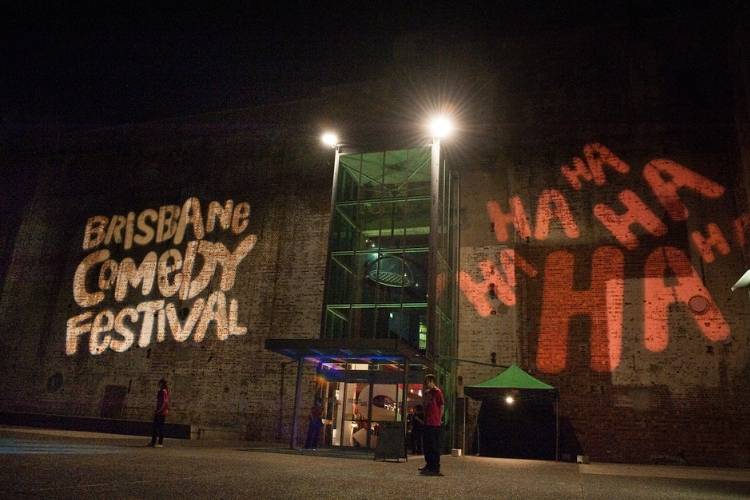
“We show up,” Meredith says. Audiences buy tickets, they take risks on artists they might not know, and they come in ready to laugh. “They’re ready to go,” she says, describing a crowd that doesn’t need to be won over in the same way as other cities. That ease shifts the dynamic in the room, making the relationship between performer and audience feel more open, and it’s something artists notice straight away.
Brisbane Comedy Festival 2010
The festival lands right after Melbourne International Comedy Festival, avoiding a clash and catching international acts on their way out. It’s a strategy that took time to prove, but it’s paying off.
If there was a moment Meredith realised the festival had shifted gears, it came in 2023. After years of planning, delays, and false starts through the pandemic, the version she had imagined was finally able to run uninterrupted, from beginning to end. “This is what I wanted it to be,” she says.
The future isn’t just about scale. It’s about reach.
She talks about taking the festival beyond Brisbane and investing in younger artists, creating pathways for the next generation. That means regional pop-ups, more access points, and a stronger focus on development, not just presentation. Because for Meredith, the real work isn’t just programming what’s already successful. It’s building what comes next.
Brisbane Comedy Festival 2026 is on from 24 April-24 May.