Love Language is an exhibition held annually on International Women’s Day by grassroots Melbourne arts company, Platform Presents.
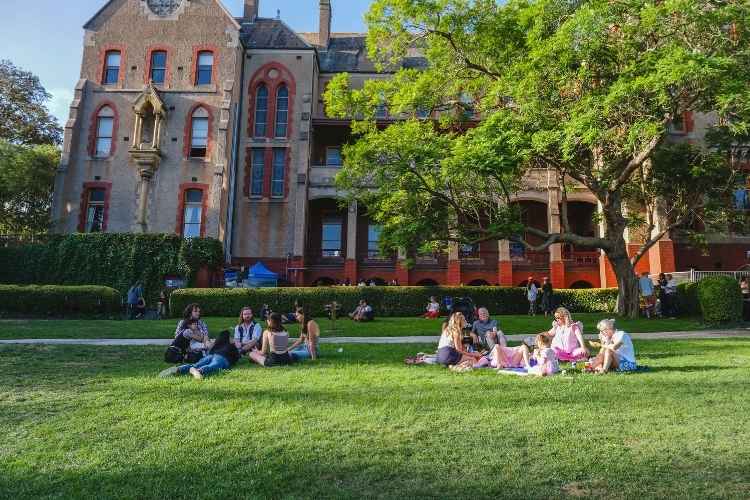
This weekend (7-8 March), the beautiful heritage building and surrounds of Abbotsford Convent come to life in a dazzling display of visual art, interactive installations, DJs and market stalls in a presentation of human connection; care, presence, memory, routine, touch and time. An acknowledgement of the people who raised and cared for us, not just seeing love in a romantic sense but relating that to parents, friends, siblings, extended and chosen family and the community we build around us.
Melbourne-based photographer, Jessica Dang, embarked on this journey seven years ago in a small, shared dorm space. Initially a project for creating a sense of her own community back home in Australia after a year of finding herself in Amsterdam, she never anticipated her Platform to blossom into the creative festival it has. A psychology graduate with a Bachelor of Science, Jessica took everything she had learned about the human psyche, how we think and feel, and risked it all, diving head first into an arts career.
“I met a bunch of creative people over in Amsterdam who pushed me in my own creativity. I had built a community there and coming back to Melbourne, I didn’t have that circle. Before I left, it felt very isolating, so I started Platform because I wanted a space to be and to connect with other people on the same path.”
Having experienced the most magical spaces Europe has to offer, Platform Presents often works with Heritage Listed Buildings Victoria for the architecture.
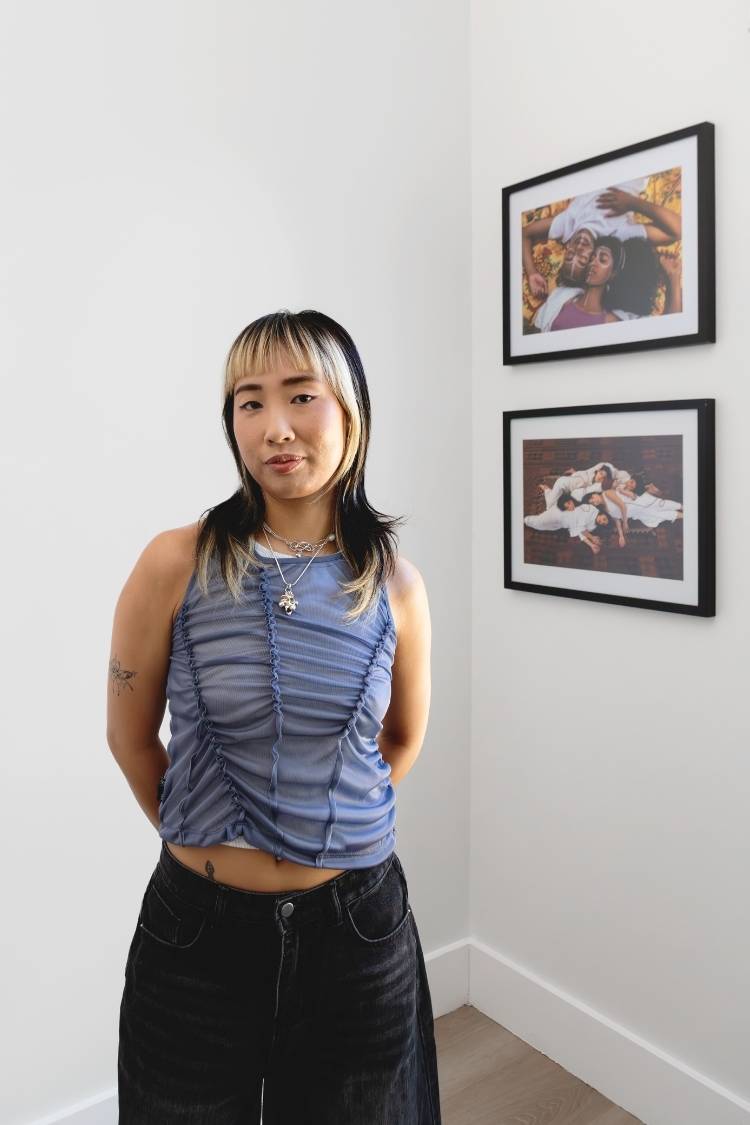
Jessica Dang
“The idea of turning a space into a gallery rather than occupying a gallery space excites me. I like to open up different spaces that people probably won’t have the opportunity to step into unless there’s an event there. Convent, where the exhibition this weekend is held, is so beautiful and has a really long history and is known as our biggest arts and cultural hub so it made sense to set it up there.”
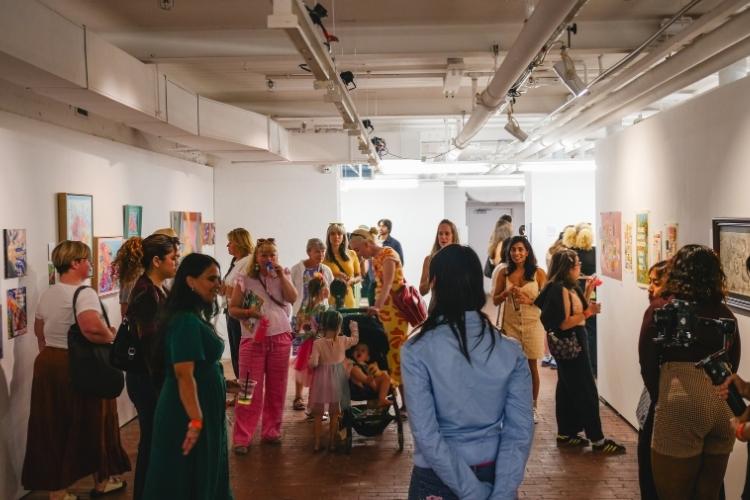
Love Language is built in a six-room gallery space with a courtyard, a far cry from the dorm space it once started in, with 30 artists exhibiting their works within this space. The event is marketed not just as a gallery to attend but as an experience where the audience are able to be part of the show.
“I think a lot of traditional gallery spaces you go to on your own, you’re there for an hour, you walk through the spaces and leave. The idea of having the DJs and market stalls in the courtyard gives the idea people can hang around and take time throughout the day. It isn’t just something you can ‘duck into’ and the weather is going to match the scene of our exhibition at a lovely 24 degrees and sunny, so it’s the perfect place to go and take a picnic, which a lot of people do at our events.”
Platform Presents holds an application process for their artists and acceptance is purely based on how the work ‘speaks’ to the theme. Jessica, along with a small panel of artists she resonates with, try not to make Platform about the merit of the artist but rather, how their work answers the questions of what the exhibition is trying to explore. It is here, they showcase a range of female and non-binary artists from all backgrounds and make sure the final line-up is as diverse in representation as it is in medium.
“We have visual art in the form of paintings, sculptures, drawings – but we also have new media works so it’s not all visual. You know with our events that when you walk in, there’s going to be things for you to touch or write and it brings you in to be part of the art. I’m thinking about arts, music and architecture and how I can put this all into one instead of streamlining it as just an art event or a music event. I’m thinking about what can we do to bridge so much of the beauty that already exists so that people start seeing things in a different light.”
Jessica’s psychology background aids in a deeper understanding of presenting works which make people uncover the parts of themselves which may be a little harder to access.
“When I’m thinking about psychology, human connection and community, I’m thinking about how I make somebody resonate with what is being presented to them. There is a fear some people have about entering art spaces, 'I’m not artsy enough' or 'I’m not going to understand this'. My whole goal is to get people to realise it’s not something you get, you just feel it and the only way you can feel it is if it’s presented to you in a way that resonates with you. We want to make you think, we want to make you question things in your life in a way that’s digestible to you.”
“Our artist statements relating to the exhibition will have very simple questions that relate to what is being presented so you can see and think about your own life and connect with the artist and therefore, connect with the art.”
Jessica explains that Platform Presents as a movement is about making art everywhere, which is why they don’t just occupy gallery spaces. Her mission is to get people to realise that art should be everywhere in everyday life, bringing home a sense of European culture to Australia. Art isn’t something accessed behind white institution walls, and she hopes the growth of Platform encourages this as a concept.
“How do I make it all work for me?” She asks. “I want to make it work on an individual level, on my own arts career level. The question is, how do I bring what I’ve experienced to turn something which already exists into something more inclusive, more diverse and more representative without it pushing that story arc too much?”
“I don’t want Platform to be all these sort of buzz words, at the end of the day, I really want to find how we can bridge those different layers we all have within ourselves, with what we are presenting, in a subtle way that changes people without them maybe even realising that they’ve been changed.”
Love Language is on at Abbotsford Convent (Melbourne) 7-8 March.