
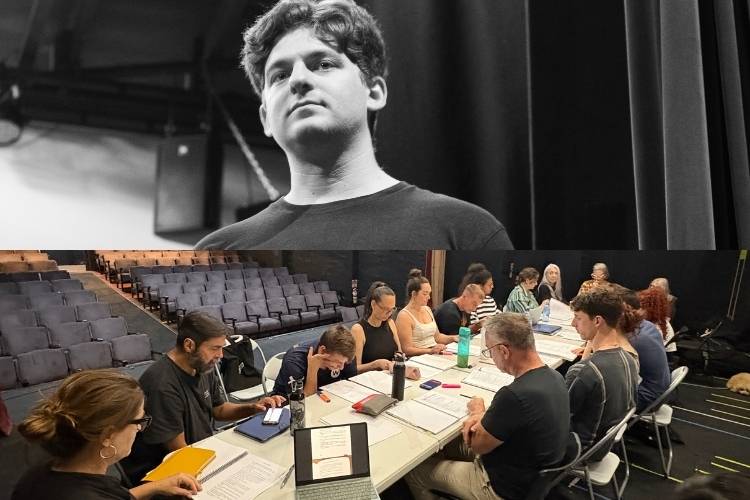
On a quiet stretch of Brisbane, behind walls that have absorbed a century of applause and rehearsal dust, something deliberate is taking shape. Not loudly. Not arrogantly. It’s unfolding with intention, grounded in the reality of how hard theatre can be to sustain.
For Ad Astra Executive Producer Gregory J. Wilken, this moment feels less like a launch and more like a reckoning. “Theatre is brutal,” he says, without dressing it up. “And survival is the real work.”
Ad Astra isn’t trying to rewrite Brisbane’s theatre story. It’s trying, along with so many other theatre companies in Brisbane, to secure its future. One where artists don’t feel their only option, once training ends, is to leave town. One where professional ambition doesn’t automatically point south. The aim is steadier than that – to build a place where people can stay, grow, and keep making work without constantly looking elsewhere.
That ambition now lives inside a building called Ad Astra, a theatre complex that feels both reverent and quietly assured. Two performance spaces sit at its core. Galaxy, a grand proscenium arch theatre with purple velour seats and wooden armrests that recall another era. And Pluto, a 44-seat black box where the distance between actor and audience almost disappears.
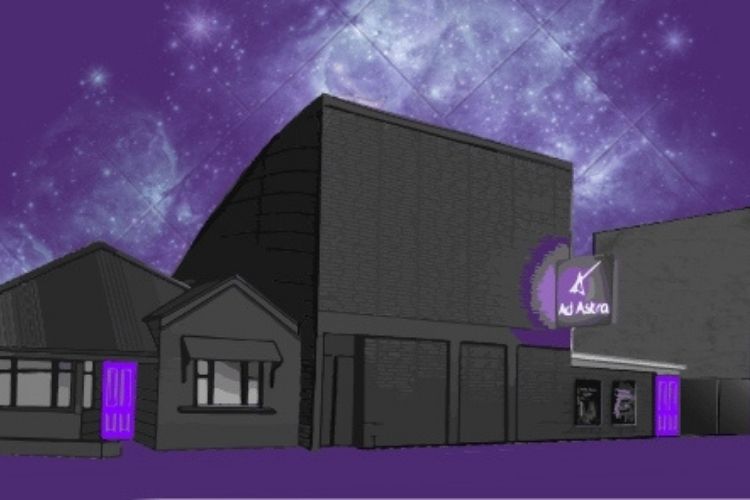
This stage of Ad Astra’s life demands precision. How the work is presented. How the spaces are spoken about. How audiences encounter it for the first time. In an industry this fragile, perception isn’t cosmetic, it’s structural.
Wilken speaks about the venue with a sense of purpose. He honours its history while emphasising the possibilities ahead. “We’re talking about what this building is now,” he says. “And what it’s becoming.”
That future continues with 'Brisbane', staged in Galaxy as the company’s first full-season production. Set in the 1940s, it follows 14-year-old Danny Fisher as adolescence collides with war, grief, and a city reshaped by American forces. “It speaks to a part of Brisbane people don’t always know,” Wilken says. “Even locals forget what this city went through.”
The story unfolds with intimacy, even on a grand stage. That contrast is intentional. “You should feel every eye movement,” Wilken says. “Every breath.”
That approach continues with 'Six Characters In Search Of An Author', Luigi Pirandello’s century-old play that spirals into questions of truth, authorship, and reality. Written in 1921, it feels unsettlingly current. “We’re all questioning what’s real,” Wilken says. “Whose truth counts.”
Galaxy’s old-world elegance sharpens that collision of past and present. “It lends itself to the classics,” Wilken says, “but we’re not interested in museum theatre. We want to make it live now.”
Pluto offers something else entirely. Up close. Unavoidable. A space where, as Wilken puts it, “you don’t get to hide”.
What unites both venues isn’t scale, but intent. Every decision comes back to quality. “Good gets in the way of great,” Wilken says. “If we settle, we never get there.”
The invitation is simple. Come because the work is strong. Come because the space feels alive. Come because Brisbane deserves theatre that trusts its audience.
The hope is that a seasoned theatre-goer walks through the doors and thinks, almost without realising it, this belongs in my rotation. In a city still defining what professional theatre can look like, that quiet shift in perception might matter most of all.
'Brisbane' plays Galaxy (Ad Astra) 19 March-11 April. 'Six Characters In Search Of An Author' plays Galaxy (Ad Astra) 14 May-6 June.